
Therapy Field Guide

A Field Guide to Therapy
If you’re reading this, you may have reached a point where the “DIY” approach to your mental health isn’t really working anymore. Maybe you’ve been carrying a heavy weight for years, or maybe—like I was in 2017—you’re trying to make sense of your life after a crisis.
I’ve sat in the patient’s chair across from six different therapists. I’ve been through group work, private sessions, the NHS system, and am now finally in a place where I’m really enjoying the therapy I’m having. Now, as a counsellor-in-training, I want to give you the guide I wish I’d had back then.
1. You Are the Expert (Not the Therapist)
The biggest mistake I made early on was thinking the person across from me held the “keys” to my brain. In one NHS session, a therapist told me I was “unable to form or maintain relationships.” At a time when I already felt fragile and like a failure, that label felt like a gut punch.
The Reality: You are the only expert on your own life. You know where it hurts, even if you don’t know why yet. If a therapist hands you a diagnosis or a label that doesn’t fit, remember: That is often just a sign that they haven’t seen the full picture of your story yet. It is not a final verdict on who you are.
2. The “Magic Word” Myth
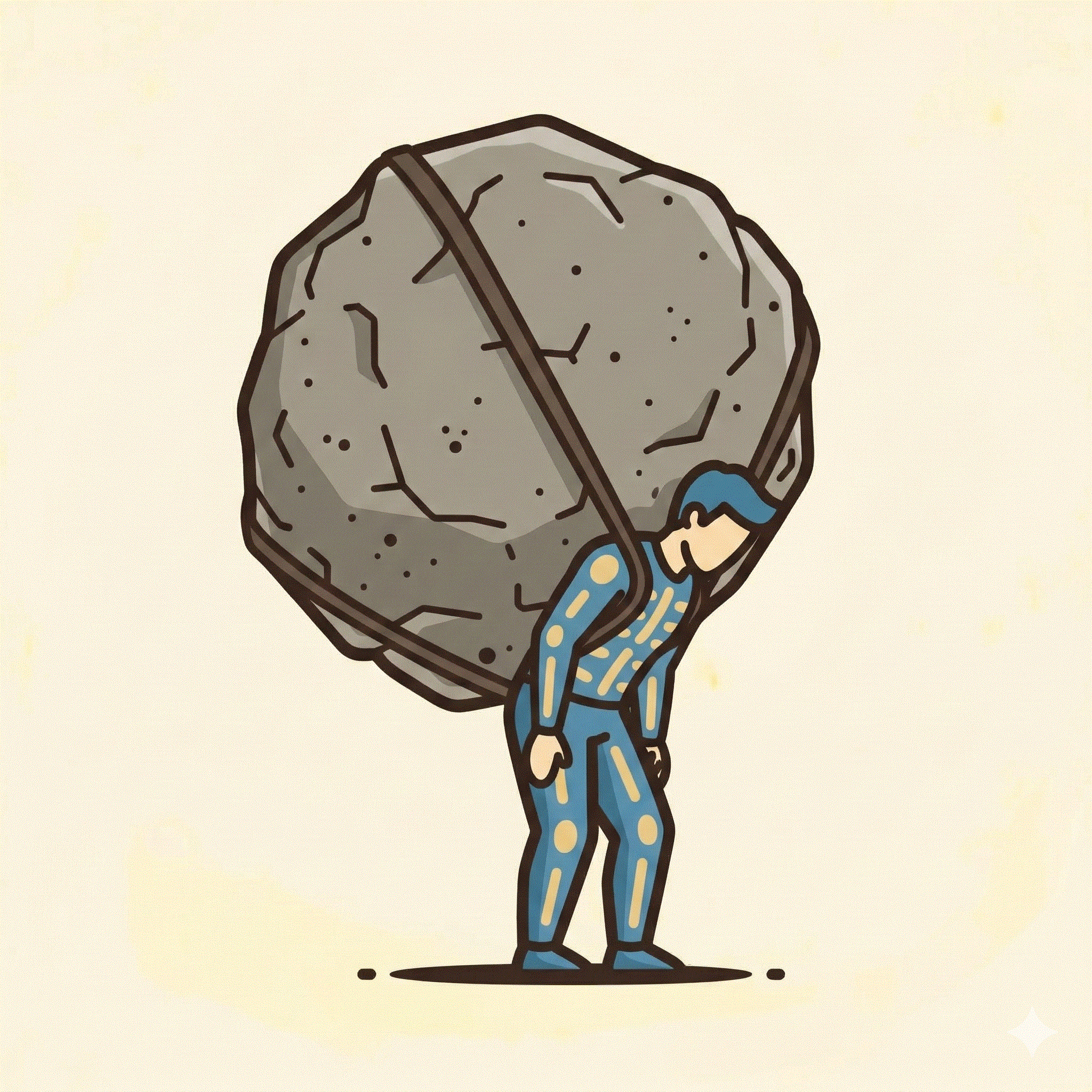
During my early therapy sessions, I lived with a secret belief: I thought that if the right words were said in the right order, I’d somehow be magically “fixed.” I was waiting for the therapist to provide a secret code.
A massive turning point in my recovery was walking out of a session and realising that wasn’t going to happen. There is no magic sentence. While the therapist provides the support, you are the one who does the work of change. I had to figure this out myself, using the therapist as a support tool, not a cure.
3. The Power of the Peer Group
In 2012, I tried group therapy. While some people assume talking in a group is high-risk, the success of numerous men’s talking groups (like Andy’s Man Club) proves the opposite.
For me, the group was where I stopped feeling like a “freak.” I heard others talking about depression in ways I hadn’t found the words for yet. In a one-on-one session, it can sometimes feel quite intense; in a group, you realise your private struggle is actually a shared human experience.
4. Stabilise Before You Analyse
Two weeks after my suicide attempt, I met a therapist named Kim. I wanted to dive into the “why,” but Kim did something better. She taught me to stop. To pause. To quite literally breathe. She focused on emotional regulation.
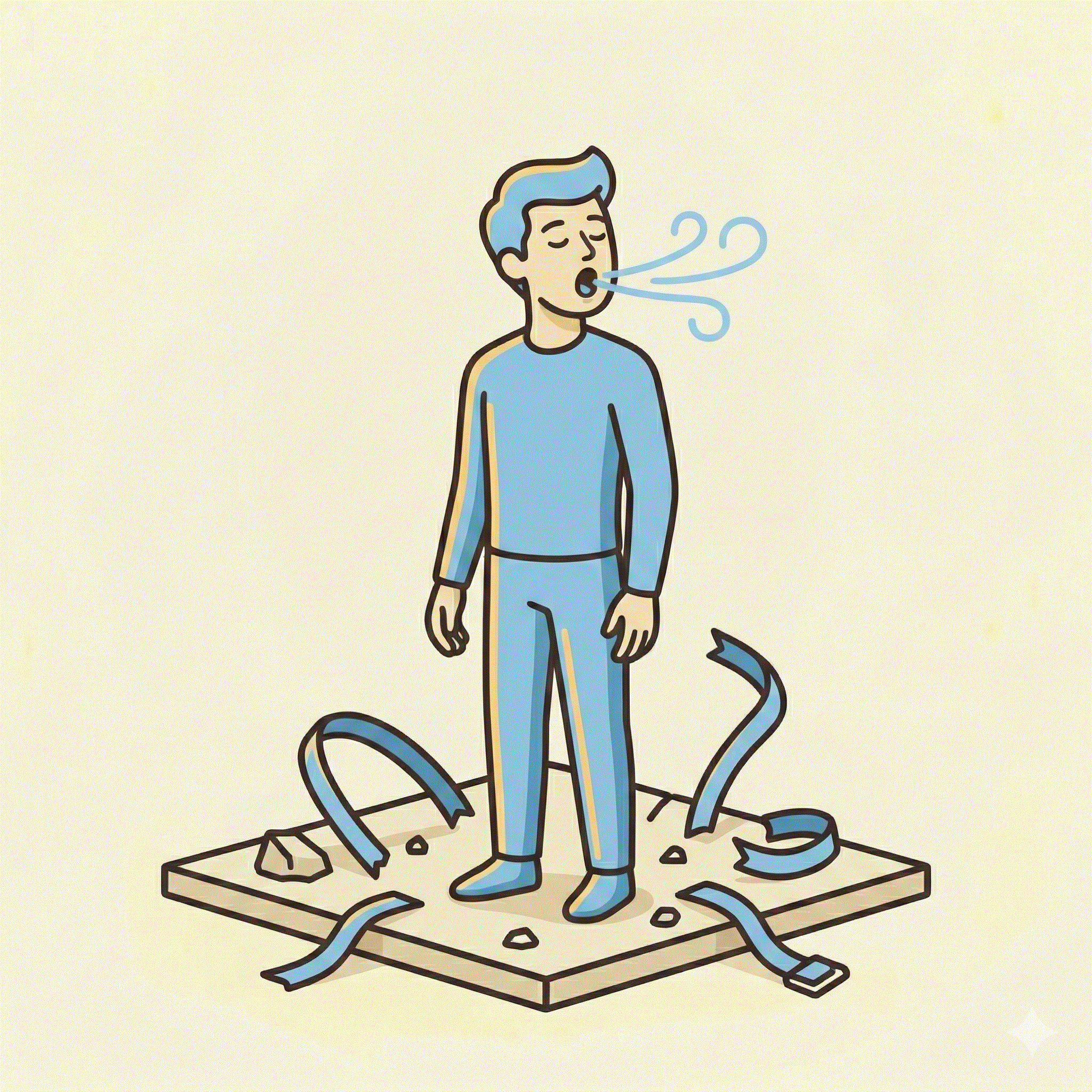
The Lesson: If you are in crisis, you don’t need a deep-dive into your past yet. You need skills to manage your immediate distress and keep your head above water. A good therapist knows when to prioritise helping you find steady ground over digging into old wounds.
5. Managing the Waiting List
One of the hardest parts of the UK system is the wait. Whether it’s NHS Talking Therapies or a specialist referral, there is often a gap between asking for help and getting it.
Prep Work: Use the wait time to reflect on your goals. What do I want to change? What’s not working? Getting clear on these now makes the first session much more effective.
Urgent Support: If your need is urgent, don’t just sit on a list. Contact crisis services like Samaritans, CALM, or your local NHS urgent mental health line.
6. Preparation: Anchor Points vs. Open Minds
Walking into a session can be daunting, but how you approach it as a client can change the outcome.
The “Anchor” Method: It helps to have one or two ideas written down on a piece of paper that you want to touch on. This keeps you from blanking out when you sit down.
The “Open Mind”: While it’s good to have a starting point, the best sessions often happen when you go in with an open mind and see what unfolds. Trust yourself to let the conversation go where it needs to. Sometimes the most important realisations come from the things you didn’t plan to talk about.
The “Transition”: Try to free up 20–30 minutes after your session. Don’t rush immediately back into a meeting or a stressful task. Give yourself a moment to process.
7. The “Click” vs. The Clinical Approach
The relationship—the therapeutic alliance—is what does the work.
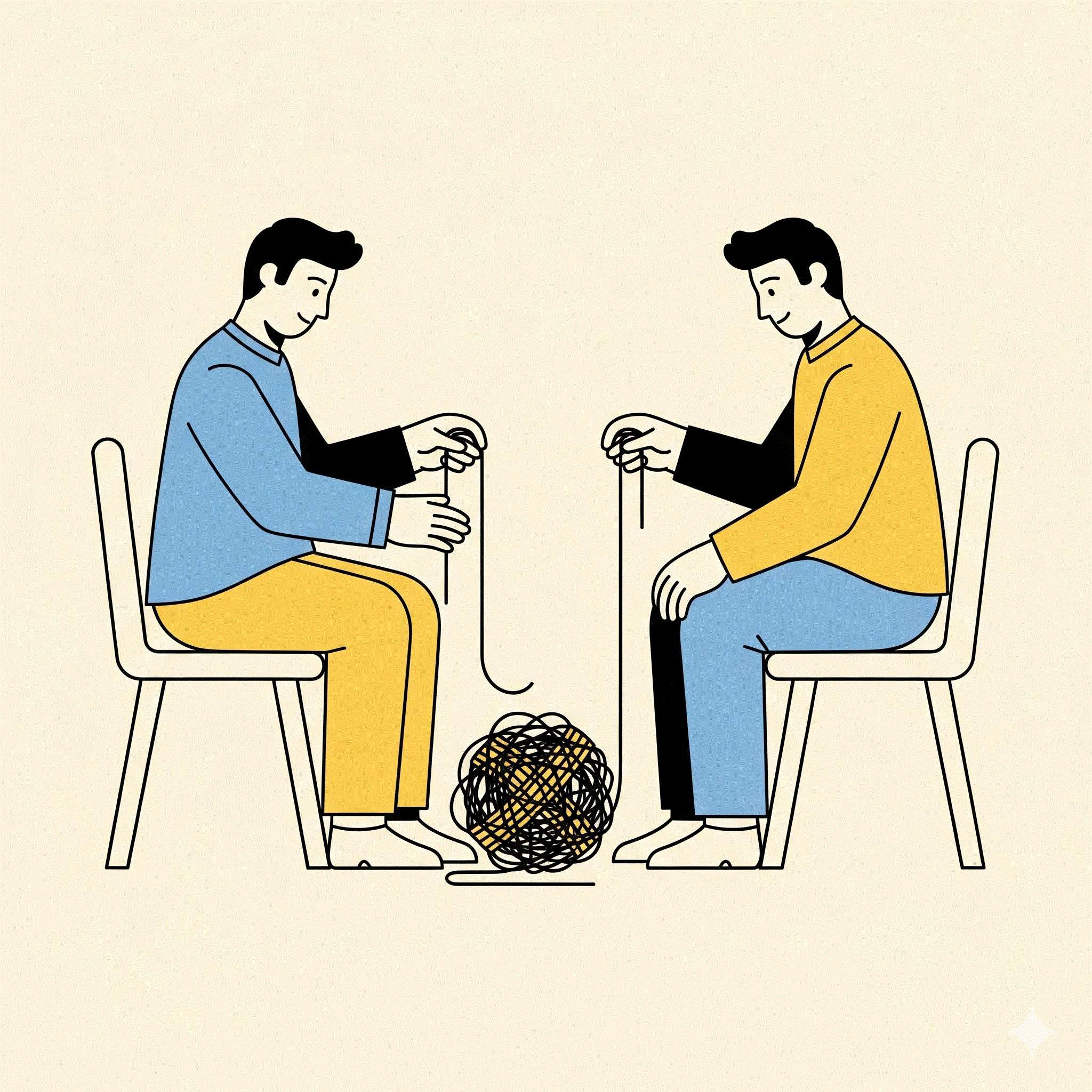
Personal Connection: With Kim, I felt seen as a whole person. That trust is what allowed me to be honest.
Clinical Assessment: In many formal settings, the focus is on “evidence-based” markers like depression scores. This is a vital, free resource, but if you feel you are being reduced to a set of symptoms, speak up. You can ask for a different therapist or a different style of support within the service.
A Final Thought from the Other Side of the Chair
I’m training to be a counsellor now because I feel I can offer real help. I’ve learned that the most important thing a therapist can provide isn’t a diagnosis; it’s a safe space to do the heavy lifting. Therapy isn’t about someone “fixing” you. It’s about finding a professional who respects your perspective while you find your own way forward.
Useful Resources
NHS Talking Therapies: Search “NHS find a talking therapies service.”
Professional Registers: Use the BACP, UKCP, or Counselling Directory to find qualified private therapists.
Low-Cost Options: Look for local charities or training organisations that offer sessions with counsellors-in-training (like myself) at a reduced rate.
Immediate Support: Samaritans (116 123) or CALM (0800 58 58 58).